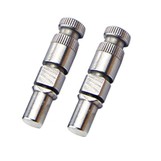
Hey there! As a supplier of Robot Main Shaft, I've been getting a lot of questions lately about what the function of the robot main shaft actually is. So, I thought I'd take a moment to break it down for you in a way that's easy to understand.
First off, let's talk about what a robot main shaft is. Simply put, it's a key component in a robot's structure. It's like the backbone of the robot, providing support and allowing for movement. The main shaft is usually located at the center of the robot's body or in a strategic position where it can efficiently transfer power and motion.
One of the primary functions of the robot main shaft is to transmit torque. Torque is the rotational force that makes the robot move. When the robot's motor generates power, it sends that power through the main shaft to the different parts of the robot, such as the arms, joints, or wheels. This allows the robot to perform various tasks, like picking up objects, moving around, or performing precise operations.
For example, in an industrial robot used in a manufacturing plant, the main shaft transfers the torque from the motor to the robot's arm. This enables the arm to move with precision and strength, allowing it to handle heavy parts or perform delicate assembly tasks. Without a properly functioning main shaft, the robot wouldn't be able to move effectively, and its performance would be severely limited.
Another important function of the robot main shaft is to provide stability. Just like a human spine keeps our body upright and balanced, the main shaft helps the robot maintain its stability during operation. It ensures that the robot doesn't wobble or tip over while it's moving or performing tasks. This is especially crucial for robots that need to work in tight spaces or on uneven surfaces.
Let's say you have a robot that's designed to work in a warehouse, moving pallets of goods from one place to another. The main shaft helps keep the robot stable as it maneuvers through the aisles, even when it's carrying heavy loads. This stability is essential for preventing accidents and ensuring the safety of both the robot and the people working around it.
In addition to torque transmission and stability, the robot main shaft also plays a role in controlling the robot's movement. It works in conjunction with the robot's control system to determine the speed, direction, and angle of the robot's motion. By adjusting the rotation of the main shaft, the control system can make the robot move smoothly and accurately.
For instance, in a robotic arm used in a surgical procedure, the main shaft allows the surgeon to control the movement of the arm with extreme precision. The control system can adjust the rotation of the main shaft to move the arm in small, incremental steps, enabling the surgeon to perform delicate operations with a high degree of accuracy.
Now, let's talk about the different types of robot main shafts and how they affect the robot's function. There are several types of main shafts, including solid shafts, hollow shafts, and splined shafts. Each type has its own unique characteristics and is suitable for different applications.
Solid shafts are the most common type of main shaft. They're made of a single piece of material, usually metal, and are known for their strength and durability. Solid shafts are ideal for robots that need to handle heavy loads or require a high level of torque transmission. They're often used in industrial robots, construction robots, and other heavy-duty applications.
Hollow shafts, on the other hand, are lighter and more flexible than solid shafts. They're made by removing the center portion of a solid shaft, creating a hollow space inside. This makes them ideal for robots that need to be lightweight and agile, such as robotic arms used in aerospace or electronics manufacturing. Hollow shafts also allow for the passage of cables, wires, or other components through the center of the shaft, which can simplify the robot's design and wiring.

Splined shafts have a series of ridges or teeth on the outside surface of the shaft. These ridges fit into corresponding grooves in the robot's components, such as gears or couplings, allowing for a more precise and secure connection. Splined shafts are commonly used in robots that require a high level of torque transmission and accurate positioning, such as robotic joints or servo motors.
As a supplier of Robot Main Shaft, I understand the importance of choosing the right main shaft for your robot. That's why we offer a wide range of main shafts in different sizes, materials, and configurations to meet the specific needs of our customers. Whether you're looking for a solid shaft for a heavy-duty industrial robot or a hollow shaft for a lightweight robotic arm, we've got you covered.
In conclusion, the robot main shaft is a critical component in a robot's structure. It plays a vital role in transmitting torque, providing stability, and controlling the robot's movement. By choosing the right main shaft for your robot, you can ensure that it operates efficiently, accurately, and safely.
If you're in the market for a robot main shaft or have any questions about our products, please don't hesitate to reach out. We'd be happy to help you find the perfect solution for your needs. Let's work together to make your robot perform at its best!
References
- "Robotics: Engineering, Control, and Applications" by John J. Craig
- "Introduction to Robotics: Mechanics and Control" by Richard Paul
- "Robot Manipulators: Mathematics, Programming, and Control" by Michael Brady