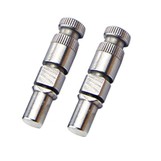
As a long shaft supplier, I've witnessed firsthand the critical role corrosion resistance plays in the performance and longevity of long shafts. In various industries, from automotive to aerospace, long shafts are often exposed to harsh environments that can lead to corrosion, which in turn can compromise their structural integrity and functionality. This blog post will delve into the corrosion - resistance requirements for long shafts, exploring the factors that influence these requirements and the strategies to meet them.
Understanding Corrosion and Its Impact on Long Shafts
Corrosion is a natural process that occurs when metals react with their environment, leading to the deterioration of the metal. For long shafts, corrosion can manifest in different forms, such as uniform corrosion, pitting corrosion, crevice corrosion, and stress - corrosion cracking. Each type of corrosion can have a significant impact on the shaft's performance.
Uniform corrosion is the most common type, where the entire surface of the shaft gradually deteriorates. This can lead to a reduction in the shaft's diameter, which may affect its mechanical properties, such as its strength and stiffness. Pitting corrosion, on the other hand, creates small holes or pits on the shaft surface. These pits can act as stress concentrators, increasing the risk of fatigue failure. Crevice corrosion occurs in areas where there are gaps or crevices, such as between the shaft and a mating component. Stress - corrosion cracking is a particularly dangerous form of corrosion that can occur when a combination of tensile stress and a corrosive environment is present. This can lead to sudden and catastrophic failure of the shaft.
Factors Influencing Corrosion - Resistance Requirements
Environmental Conditions
The environment in which the long shaft operates is a major factor in determining its corrosion - resistance requirements. For example, in marine applications, long shafts are exposed to saltwater, which is highly corrosive. The high concentration of chloride ions in saltwater can accelerate the corrosion process, especially for metals like carbon steel. In such cases, a high level of corrosion resistance is required to ensure the shaft's long - term performance.
In industrial settings, long shafts may be exposed to chemicals, acids, or alkalis. The type and concentration of these substances will determine the appropriate corrosion - resistant materials and coatings. For instance, in a chemical processing plant, shafts used in contact with strong acids may need to be made of highly corrosion - resistant alloys like titanium or have a specialized coating to prevent corrosion.


Operating Temperature
Temperature also plays a crucial role in corrosion. Higher temperatures generally accelerate the corrosion process. In high - temperature applications, such as in engines or furnaces, long shafts need to be able to withstand both the elevated temperature and the associated corrosion. Some materials may lose their corrosion resistance at high temperatures, so careful material selection is necessary. For example, certain stainless steels may experience a decrease in corrosion resistance above a certain temperature due to the formation of chromium carbides, which can lead to intergranular corrosion.
Mechanical Stress
Mechanical stress can interact with corrosion to cause stress - corrosion cracking. Long shafts are often subjected to various types of mechanical stress, such as tensile stress, compressive stress, and bending stress. The combination of stress and a corrosive environment can significantly increase the risk of failure. Therefore, the corrosion - resistance requirements should take into account the level and type of mechanical stress the shaft will experience.
Meeting Corrosion - Resistance Requirements
Material Selection
One of the most effective ways to meet corrosion - resistance requirements is through proper material selection. Stainless steel is a popular choice for long shafts due to its excellent corrosion resistance. Stainless Steel Long Shaft offers a good balance of strength, durability, and corrosion resistance. Different grades of stainless steel have different levels of corrosion resistance, depending on their chemical composition. For example, austenitic stainless steels, such as 304 and 316, are widely used in various applications due to their good corrosion resistance in many environments.
Other materials, such as titanium alloys, are also known for their high corrosion resistance, especially in aggressive environments. However, titanium alloys are more expensive than stainless steel, so their use is often limited to applications where the high cost can be justified by the need for superior corrosion resistance.
Surface Treatments
Surface treatments can enhance the corrosion resistance of long shafts. Coatings, such as zinc plating, nickel plating, or epoxy coatings, can provide a barrier between the shaft surface and the corrosive environment. Zinc plating is a common and cost - effective way to protect carbon steel shafts from corrosion. It acts as a sacrificial anode, corroding preferentially to the steel substrate.
Anodizing is another surface treatment method, especially suitable for aluminum shafts. Anodizing creates a protective oxide layer on the surface of the aluminum, which can improve its corrosion resistance and also enhance its wear resistance.
Design Considerations
Proper design can also contribute to the corrosion resistance of long shafts. For example, avoiding crevices and sharp corners in the shaft design can reduce the risk of crevice corrosion and stress - concentration. Ensuring proper drainage and ventilation around the shaft can prevent the accumulation of moisture, which is a key factor in corrosion. Additionally, using appropriate seals and gaskets to prevent the ingress of corrosive substances into the shaft area can help maintain its corrosion resistance.
Precision Long Shafts and Corrosion Resistance
In applications where precision is crucial, such as in aerospace or high - precision machinery, Precision Long Shaft must meet strict corrosion - resistance requirements. Any form of corrosion can affect the dimensional accuracy of the shaft, which can lead to poor performance of the entire system. For example, in a precision gearbox, a corroded long shaft may cause misalignment of the gears, resulting in increased noise, vibration, and reduced efficiency.
To ensure the corrosion resistance of precision long shafts, tight control over the manufacturing process is required. This includes proper material selection, high - quality surface finishing, and strict quality control measures. For instance, precision machining can ensure a smooth surface finish, which can reduce the risk of corrosion initiation. Additionally, post - machining treatments, such as passivation for stainless steel shafts, can further enhance their corrosion resistance.
Conclusion
Corrosion resistance is a critical requirement for long shafts in various industries. The environmental conditions, operating temperature, and mechanical stress all influence the level of corrosion resistance needed. By carefully considering these factors, selecting the appropriate materials, applying suitable surface treatments, and implementing proper design strategies, long shafts can be made to withstand the corrosive environments they are exposed to.
As a long shaft supplier, we understand the importance of providing high - quality, corrosion - resistant long shafts to our customers. Whether you need a Stainless Steel Long Shaft for a marine application or a Precision Long Shaft for a high - precision machinery, we have the expertise and resources to meet your needs.
If you are interested in learning more about our long shafts or would like to discuss your specific requirements, please feel free to contact us. We are always ready to engage in procurement discussions to find the best solutions for your projects.
References
- Fontana, M. G. (1986). Corrosion Engineering. McGraw - Hill.
- Uhlig, H. H., & Revie, R. W. (1985). Corrosion and Corrosion Control. Wiley - Interscience.
- ASM Handbook, Volume 13A: Corrosion: Fundamentals, Testing, and Protection. ASM International.