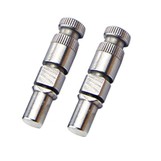
Hey there! As a supplier of AC Motor Shafts, I've seen firsthand the importance of corrosion resistance in these components. In this blog, I'll dive into what corrosion resistance requirements are crucial for an AC motor shaft and why they matter so much.
First off, let's understand what corrosion is. Corrosion is basically the deterioration of a material, in this case, the AC motor shaft, due to chemical reactions with its environment. It can lead to a whole bunch of problems, like reduced performance, shorter lifespan, and even complete failure of the motor. That's why having proper corrosion resistance is a must.
One of the main factors that affect the corrosion resistance requirements of an AC motor shaft is the operating environment. If the motor is going to be used in a harsh environment, like in a marine setting where there's a lot of saltwater, or in a chemical plant where there are corrosive chemicals in the air, the shaft needs to be able to withstand these conditions. For instance, saltwater is extremely corrosive because of the high concentration of salt ions. These ions can react with the metal of the shaft, causing it to rust and deteriorate over time.
In a marine environment, the AC motor shaft should have a high level of corrosion resistance. A common material used for shafts in such conditions is stainless steel. Stainless steel contains chromium, which forms a thin, protective oxide layer on the surface of the metal. This layer acts as a barrier, preventing oxygen and moisture from reaching the underlying metal and causing corrosion. Among different grades of stainless steel, SUS316 is often a top choice for marine applications. You can check out more about Motor Shaft SUS303 SUS304 SUS316 on our website. It has a higher content of nickel and molybdenum compared to other grades, which enhances its corrosion resistance, especially against chloride ions found in saltwater.
Another important environment is the industrial one. In factories, motors are often exposed to various chemicals and pollutants. Some chemicals can be highly acidic or alkaline, which can eat away at the motor shaft. For example, in a battery manufacturing plant, there might be sulfuric acid present. If the AC motor shaft isn't resistant to acid corrosion, it can quickly degrade. In such cases, we might recommend using a shaft made of a special alloy or a coated shaft. A coated shaft has a protective layer applied on its surface, which can be made of materials like epoxy or ceramic. This coating acts as a shield, protecting the shaft from chemical attacks.
The humidity level in the operating environment also plays a big role. High humidity means there's more moisture in the air, which can accelerate the corrosion process. Even in a relatively clean indoor environment, if the humidity is consistently high, the AC motor shaft can still be at risk of corrosion. To combat this, the shaft might need to have a good surface finish. A smooth surface is less likely to trap moisture and dirt, which can reduce the chances of corrosion. Additionally, some manufacturers use anti - corrosion treatments, like passivation, which further enhances the shaft's resistance to humidity - related corrosion.
Now, let's talk about the mechanical properties of the AC motor shaft in relation to corrosion resistance. The shaft needs to maintain its mechanical integrity even when exposed to corrosive elements. For example, it should still be able to transmit torque effectively without any loss of strength. If the shaft corrodes, it can develop pits and cracks, which can weaken the structure. This can lead to vibrations, misalignment, and eventually, failure of the motor. So, the corrosion resistance requirements also take into account the need to preserve the mechanical performance of the shaft.
In terms of industry standards, there are specific requirements for the corrosion resistance of AC motor shafts. These standards ensure that the shafts are safe and reliable for use in different applications. For example, the International Electrotechnical Commission (IEC) has guidelines regarding the materials and surface treatments for motor components, including shafts. Compliance with these standards is not only important for the performance of the motor but also for legal and safety reasons.
When it comes to choosing the right AC motor shaft for your application, it's essential to consider all these factors. You need to assess the operating environment, the expected lifespan of the motor, and the mechanical requirements. If you're unsure, our team of experts can help you make the right decision. We offer a wide range of AC Motor Shaft options, each designed to meet different corrosion resistance requirements.
We also supply DC Motor Shaft, which has its own set of corrosion resistance requirements. While the basic principles of corrosion are similar for both AC and DC motor shafts, the specific applications and operating conditions can vary, leading to different requirements.


If you're in the market for high - quality AC motor shafts with excellent corrosion resistance, don't hesitate to reach out. We're here to provide you with the best products and solutions for your needs. Whether you're in the marine, industrial, or any other sector, we can help you find the perfect shaft that meets your corrosion resistance requirements. Let's have a chat about your project and see how we can work together to ensure the long - term performance of your motors.
References
- International Electrotechnical Commission (IEC) standards on motor components
- Technical literature on stainless steel and its corrosion resistance properties