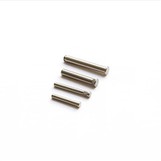
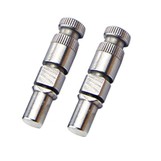
Electromagnetic effects on a rotating shaft are a topic of significant interest in the engineering and manufacturing sectors. As a supplier of rotating shafts, I've witnessed firsthand the importance of understanding these effects to ensure the optimal performance and longevity of our products. In this blog, I'll delve into the various electromagnetic effects that can impact a rotating shaft and discuss how we, as a supplier, address these challenges to provide high - quality rotating shafts.
1. Electromagnetic Induction
One of the primary electromagnetic effects on a rotating shaft is electromagnetic induction. According to Faraday's law of electromagnetic induction, when a conductor (in this case, the rotating shaft) moves through a magnetic field or when the magnetic field around the conductor changes, an electromotive force (EMF) is induced in the conductor.
In industrial applications, rotating shafts are often in the vicinity of electrical motors, generators, or other magnetic components. For example, in an electric motor, the rotating shaft is part of the rotor, which rotates within a magnetic field created by the stator. As the shaft rotates, an EMF is induced in it. This induced EMF can lead to the generation of eddy currents within the shaft material.
Eddy currents are circular currents that flow within the conductor due to the induced EMF. These currents can cause several issues. Firstly, they result in power losses in the form of heat. The heat generated can increase the temperature of the shaft, which may lead to thermal expansion. Thermal expansion can cause dimensional changes in the shaft, affecting its fit within the bearings and other components. This, in turn, can lead to increased wear and tear, reduced efficiency, and potentially premature failure of the shaft.
As a rotating shaft supplier, we take steps to mitigate the effects of eddy currents. We carefully select the shaft material based on its electrical conductivity. Materials with lower electrical conductivity are less prone to the generation of strong eddy currents. For example, some stainless steel alloys can be used as they have relatively low electrical conductivity compared to pure metals like copper or aluminum. Additionally, we can use laminated or segmented shaft designs. By laminating the shaft, we can break up the path of the eddy currents, reducing their magnitude and the associated power losses and heating effects. Precision Rotating Shaft often incorporate these design features to enhance their performance in electromagnetic environments.
2. Magnetic Hysteresis
Magnetic hysteresis is another important electromagnetic effect on a rotating shaft. When a magnetic material (such as a ferromagnetic shaft) is subjected to a changing magnetic field, the magnetization of the material does not follow a linear path. Instead, there is a lag between the applied magnetic field and the resulting magnetization of the material. This lag is known as magnetic hysteresis.
In a rotating shaft, if it is made of a ferromagnetic material and is exposed to a changing magnetic field (for example, in a magnetic coupling or a magnetic bearing system), the hysteresis effect can cause energy losses. These losses are dissipated as heat, similar to the eddy current losses. The heat generated due to magnetic hysteresis can also contribute to the overall temperature rise of the shaft.
Moreover, the hysteresis effect can cause mechanical stress in the shaft. As the magnetization of the material changes, there are internal structural changes within the ferromagnetic material. These changes can lead to dimensional changes and internal stresses, which can affect the mechanical integrity of the shaft. Over time, these stresses can cause fatigue and cracking in the shaft, reducing its service life.
To address the issue of magnetic hysteresis, we at our company carefully choose the shaft material. We may opt for materials with low hysteresis loss, such as some soft magnetic alloys. These alloys are designed to have a narrow hysteresis loop, which means that they experience less energy loss when subjected to a changing magnetic field. Additionally, we can perform heat treatments on the shaft to optimize its magnetic properties and reduce the hysteresis effect.
3. Electromagnetic Interference (EMI)
Electromagnetic interference is a growing concern in modern industrial environments. Rotating shafts can both be a source and a victim of EMI. As a source, the electrical currents and magnetic fields associated with the rotation of the shaft can radiate electromagnetic waves. These waves can interfere with other nearby electronic devices, such as sensors, control systems, and communication equipment.
On the other hand, rotating shafts can also be affected by external EMI. For example, in a factory with a lot of electrical machinery, the electromagnetic fields generated by other equipment can induce unwanted currents and voltages in the rotating shaft. These induced currents and voltages can disrupt the normal operation of the shaft - related systems. For instance, in a precision measurement system where the rotation of the shaft is monitored, EMI can introduce errors in the measurement readings.
As a rotating shaft supplier, we implement shielding techniques to reduce EMI. We can use conductive coatings or enclosures around the shaft to block the electromagnetic waves. These shields can be made of materials like copper or aluminum, which are good conductors of electricity and can effectively redirect the electromagnetic fields away from the shaft and other sensitive components. Additionally, we can design the shaft and its associated components to be more resistant to EMI. For example, we can use filtered electrical connections and proper grounding techniques to minimize the impact of external EMI on the shaft.
4. Impact on Bearing Performance
The electromagnetic effects on a rotating shaft can also have a significant impact on the performance of the bearings that support the shaft. The heat generated due to eddy currents and magnetic hysteresis can increase the temperature of the bearings. High temperatures can reduce the viscosity of the lubricant used in the bearings, leading to increased friction and wear.
Moreover, the electromagnetic forces acting on the shaft can cause misalignment and vibration. These vibrations can be transmitted to the bearings, leading to premature failure. For example, the induced currents in the shaft can create magnetic forces that pull the shaft out of its normal alignment, putting additional stress on the bearings.
To ensure the proper performance of the bearings, we work closely with bearing manufacturers. We provide detailed information about the electromagnetic environment in which the shaft will operate. This allows the bearing manufacturers to select the appropriate bearing materials, lubricants, and designs. For example, high - temperature - resistant lubricants can be used to compensate for the increased heat generated by the electromagnetic effects.
5. Quality Assurance and Testing
As a rotating shaft supplier, we have a rigorous quality assurance and testing process in place to ensure that our shafts can withstand the electromagnetic effects. We use advanced testing equipment to measure the electrical conductivity, magnetic properties, and temperature rise of the shafts under simulated electromagnetic conditions.
For example, we use eddy current testing to detect any potential flaws or inhomogeneities in the shaft material that could affect its electromagnetic performance. We also perform magnetic field mapping to understand how the magnetic field interacts with the shaft. This helps us to optimize the design and material selection of the shaft.
In addition, we conduct long - term durability tests on our shafts in real - world electromagnetic environments. These tests allow us to identify any potential issues early on and make necessary improvements to our products.
Conclusion
Understanding the electromagnetic effects on a rotating shaft is crucial for ensuring its reliable performance and longevity. As a rotating shaft supplier, we are committed to providing high - quality products that can withstand these effects. By carefully selecting materials, implementing appropriate design features, and conducting thorough testing, we can offer rotating shafts that meet the demanding requirements of various industrial applications.


If you are in need of high - performance rotating shafts that can handle electromagnetic challenges, we invite you to contact us for a procurement discussion. Our team of experts is ready to work with you to understand your specific needs and provide the best solutions.
References
- Griffiths, D. J. (1999). Introduction to Electrodynamics. Prentice Hall.
- Chapman, S. J. (2012). Electric Machinery Fundamentals. McGraw - Hill.
- Kraus, J. D., & Carver, K. R. (1988). Electromagnetics. McGraw - Hill.