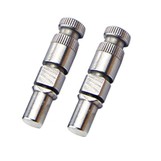
Hey there! As a supplier of AC motor shafts, I've been in the game long enough to understand the ins and outs of what makes these components tick. One of the most common questions I get from customers is about the relationship between the shaft diameter and power transmission in an AC motor. So, let's dive right into it!


Basics of AC Motors and Shafts
First off, let's quickly go over what an AC motor is and why the shaft is such a crucial part. An AC motor converts electrical energy into mechanical energy. The shaft is the central component that transfers this mechanical energy from the motor to the load. It's like the bridge between the power source and the work that needs to be done.
The shaft's diameter might seem like just a number, but it plays a huge role in how well the motor functions. A shaft that's too thin might not be able to handle the power being transmitted, while one that's too thick could add unnecessary weight and cost.
The Science Behind Shaft Diameter and Power Transmission
When it comes to power transmission in an AC motor, there are a few key factors at play. Power (P) is related to torque (T) and angular velocity (ω) by the equation P = T * ω. Torque is the rotational force that the shaft needs to transmit, and angular velocity is how fast the shaft is rotating.
The shaft diameter directly affects the shaft's ability to transmit torque. A larger diameter shaft can handle more torque because it has a greater cross - sectional area. Think of it like a stronger rope can pull more weight than a thinner one. The cross - sectional area of a shaft is proportional to the square of its diameter (A = π * (d/2)^2, where d is the diameter).
As the power requirement of the motor increases, the torque also needs to increase. To handle this increased torque, a larger diameter shaft is often necessary. If we try to use a shaft with a diameter that's too small for the power being transmitted, the shaft can experience excessive stress. This stress can lead to deformation, fatigue, and ultimately, failure of the shaft.
Practical Considerations in Shaft Selection
In real - world applications, choosing the right shaft diameter isn't just about the science. There are several practical factors to consider.
Cost
Larger diameter shafts are generally more expensive. They require more material to manufacture, and the machining processes can be more complex. As a supplier, I always work with my customers to find a balance between performance and cost. Sometimes, a slightly smaller diameter shaft can be used if the motor's operating conditions are less demanding.
Space Constraints
In some applications, there are strict space limitations. For example, in a compact electric vehicle motor or a small household appliance, there might not be enough room for a large - diameter shaft. In these cases, we need to get creative and find ways to optimize the shaft design to transmit the required power within the available space.
Load Characteristics
The type of load the motor is driving also matters. If the load is constantly changing, such as in a conveyor belt system that starts and stops frequently, the shaft needs to be able to handle the dynamic forces. A larger diameter shaft can better withstand these sudden changes in torque compared to a smaller one.
Types of Shafts for Different Applications
As an AC motor shaft supplier, I offer a variety of shafts to meet different customer needs.
Brushless Motor Shaft
Brushless motors are becoming increasingly popular due to their high efficiency and reliability. Brushless Motor Shaft is designed to work seamlessly with these motors. They are often made from high - quality materials to ensure smooth operation and long service life.
Motor Shaft SUS303 SUS304 SUS316
For applications where corrosion resistance is a concern, we offer Motor Shaft SUS303 SUS304 SUS316. These shafts are made from stainless steel grades SUS303, SUS304, or SUS316, which provide excellent resistance to rust and chemical attack. They are commonly used in food processing equipment, marine applications, and other environments where the shaft is exposed to harsh conditions.
DC Motor Shaft
Although we mainly focus on AC motor shafts, we also supply DC Motor Shaft for customers who have specific DC motor requirements. DC motors have different operating characteristics compared to AC motors, and the shafts need to be designed accordingly.
How to Determine the Right Shaft Diameter
So, how do you figure out the right shaft diameter for your AC motor? Here are some steps:
- Calculate the power requirements: Determine the power that the motor needs to transmit. This can be based on the load requirements, such as the speed and force needed to move a conveyor belt or operate a pump.
- Estimate the torque: Use the power and angular velocity relationship (P = T * ω) to calculate the required torque. Remember to consider any dynamic factors, such as acceleration and deceleration.
- Consider the safety factor: It's always a good idea to add a safety factor to account for any unexpected loads or variations in operating conditions. A typical safety factor might range from 1.2 to 2.
- Refer to industry standards and guidelines: There are many industry standards available that provide recommendations for shaft diameters based on power and torque ratings. These can be a great starting point for your shaft selection.
Working with a Supplier
As a supplier, my goal is to make the shaft selection process as easy as possible for my customers. I have a team of experts who can help you analyze your requirements and recommend the right shaft diameter. We also offer custom - made shafts to meet your specific needs.
If you're in the market for an AC motor shaft, I encourage you to reach out. Whether you're a small business looking for a single shaft or a large manufacturer with high - volume orders, we can work together to find the best solution for your application. Contact us to start a discussion about your project, and let's find the perfect shaft for your AC motor.
Conclusion
The relationship between shaft diameter and power transmission in an AC motor is a complex but crucial aspect of motor design. By understanding the science behind it and considering the practical factors, you can make an informed decision when selecting a shaft. As an AC motor shaft supplier, I'm here to support you every step of the way. Whether you need a Brushless Motor Shaft, Motor Shaft SUS303 SUS304 SUS316, or DC Motor Shaft, I've got you covered. Don't hesitate to get in touch and start the conversation about your next project.
References
- "Electric Machinery" by Stephen J. Chapman
- "Mechanical Engineering Design" by Joseph E. Shigley and Charles R. Mischke