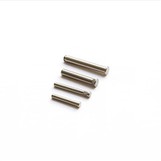
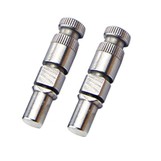
Hey there! As a knurled shaft supplier, I've been in the game for quite a while, and I often get asked about the industry standards for knurled shafts. So, I thought I'd take a moment to break it down for you.
First off, let's talk about what a knurled shaft is. A knurled shaft is a type of mechanical component that has a textured surface, usually created by rolling or cutting a pattern into the shaft. This texture provides a better grip, which is useful in a variety of applications, from hand tools to machinery.


Material Standards
One of the most important aspects of knurled shafts is the material they're made from. The choice of material can significantly impact the performance and durability of the shaft.
- Stainless Steel: Stainless steel is a popular choice for knurled shafts due to its corrosion resistance and strength. Stainless Steel Knurled Shaft are often used in applications where the shaft will be exposed to moisture or harsh chemicals. The industry standard for stainless steel knurled shafts typically requires a certain level of chromium and nickel content to ensure proper corrosion resistance. For example, 304 stainless steel, which contains around 18% chromium and 8% nickel, is commonly used.
- Carbon Steel: Carbon steel is another common material for knurled shafts. It's known for its high strength and relatively low cost. However, carbon steel is more prone to rusting compared to stainless steel. To combat this, carbon steel knurled shafts are often coated or treated with a rust - preventive finish. The carbon content in carbon steel can vary, but for most knurled shaft applications, medium - carbon steel with a carbon content of around 0.3% - 0.6% is used.
- Aluminum: Aluminum knurled shafts are lightweight and have good corrosion resistance. They're often used in applications where weight is a concern, such as in aerospace or portable equipment. The industry standard for aluminum knurled shafts usually specifies the alloy type, such as 6061 or 7075, which have different mechanical properties.
Dimension and Tolerance Standards
Accurate dimensions are crucial for knurled shafts, as they need to fit precisely into the intended application.
- Diameter: The diameter of a knurled shaft is one of the most critical dimensions. Industry standards typically specify the nominal diameter and the allowable tolerance. For example, a shaft with a nominal diameter of 10 mm might have a tolerance of ±0.05 mm. This ensures that the shaft can be properly installed and function as intended.
- Length: The length of the knurled shaft also needs to be within a specified tolerance. Depending on the application, the tolerance for length can vary from a few tenths of a millimeter to a few millimeters.
- Knurl Pattern Dimensions: The size and shape of the knurl pattern are also standardized. The pitch of the knurl, which is the distance between adjacent knurl ridges, is typically specified. Common pitch sizes range from 0.2 mm to 2 mm, depending on the application. The depth of the knurl is another important dimension, and it usually ranges from 0.1 mm to 0.5 mm.
Surface Finish Standards
The surface finish of a knurled shaft can affect its performance and appearance.
- Roughness: The roughness of the knurled surface is measured in micrometers (μm). Industry standards typically specify a maximum roughness value for the knurled area. For example, for a precision application, the roughness of the knurled surface might be required to be less than 3.2 μm. A smoother surface finish can reduce friction and wear, while a rougher surface can provide a better grip.
- Hardness: The hardness of the knurled shaft surface is also important. It affects the wear resistance and the ability of the knurl to maintain its shape over time. Depending on the material, the industry standard for hardness can vary. For example, a stainless steel knurled shaft might have a hardness requirement of around 150 - 250 HV (Vickers hardness), while a carbon steel knurled shaft could have a higher hardness value, around 200 - 350 HV.
Performance Standards
Knurled shafts need to meet certain performance criteria to be considered up to industry standards.
- Torque Transmission: In applications where the knurled shaft is used to transmit torque, the shaft needs to be able to withstand a certain amount of torque without slipping. Industry standards might specify the minimum torque capacity based on the diameter and material of the shaft.
- Fatigue Resistance: If the knurled shaft is subjected to repeated loading or cycling, it needs to have good fatigue resistance. Standards can define the number of cycles the shaft can withstand before failure under a given load.
Quality Control Standards
To ensure that knurled shafts meet the industry standards, strict quality control measures are in place.
- Inspection Methods: Manufacturers use a variety of inspection methods, such as dimensional measurement with calipers, micrometers, and coordinate measuring machines (CMMs). Non - destructive testing methods, like ultrasonic testing and magnetic particle inspection, can be used to detect internal defects.
- Certification: Many knurled shaft suppliers obtain certifications, such as ISO 9001, which demonstrates their commitment to quality management systems. These certifications can give customers confidence that the products they're purchasing meet the required standards.
Precision Knurled Shafts
For applications that require high precision, Precision Knurled Shaft are used. These shafts have even tighter tolerances and higher surface finish requirements compared to standard knurled shafts. Precision knurled shafts are often used in industries such as medical devices, electronics, and automotive manufacturing.
In conclusion, the industry standards for knurled shafts cover a wide range of aspects, from material and dimension to performance and quality control. As a knurled shaft supplier, we're dedicated to meeting these standards to provide our customers with high - quality products.
If you're in the market for knurled shafts and want to discuss your specific requirements, feel free to reach out. We're here to help you find the perfect solution for your application. Whether you need a standard knurled shaft or a custom - designed precision one, we've got you covered.
References
- "Mechanical Engineering Handbook" by Myer Kutz
- "Manufacturing Engineering and Technology" by Serope Kalpakjian and Steven Schmid