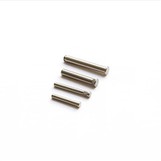
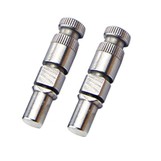
Hey there! I'm a supplier of solid shafts, and today I wanna talk about the pulley - mounting methods for a solid shaft. As someone who deals with solid shafts on a daily basis, I know how important it is to understand the right way to mount pulleys on these shafts.
Key Considerations Before Mounting
Before we dive into the mounting methods, there are a few things you need to keep in mind. First off, the size of the shaft and the pulley is crucial. You gotta make sure they're compatible. A mismatched size can lead to all sorts of problems, like poor performance or even damage to the equipment.
Another thing is the type of load the pulley will be carrying. If it's a light - duty load, you might be able to get away with a simpler mounting method. But for heavy - duty loads, you'll need a more secure and robust mounting solution.
Different Pulley - Mounting Methods
1. Set Screw Method
The set screw method is one of the simplest and most common ways to mount a pulley on a solid shaft. All you need is a set screw that's tightened against the shaft. This creates friction, which holds the pulley in place.
The advantage of this method is its simplicity. It's easy to install and doesn't require any special tools. You can just use a regular wrench to tighten the set screw. However, it also has its drawbacks. The set screw can damage the shaft surface, especially if it's tightened too much. And it might not be the best option for high - torque applications because the friction might not be enough to keep the pulley from slipping.


If you're dealing with a light - duty application where the pulley doesn't need to transmit a lot of power, the set screw method can be a great choice. For example, in some small - scale conveyor systems or simple machinery, this method works just fine.
2. Taper Bushing Method
The taper bushing method is a more advanced and reliable way to mount a pulley. A taper bushing is a split, tapered sleeve that fits between the shaft and the pulley. When you tighten the bolts on the bushing, it compresses and expands against the shaft and the pulley, creating a tight fit.
One of the main advantages of the taper bushing method is that it provides a more uniform grip on the shaft compared to the set screw method. This reduces the risk of damage to the shaft and ensures better power transmission. It's also easier to install and remove the pulley when needed. You just need to loosen the bolts on the bushing, and the pulley can be taken off.
This method is suitable for medium - to heavy - duty applications. For instance, in industrial machinery where there are high - torque requirements, the taper bushing method is often used. It can handle larger loads and provides a more stable connection between the pulley and the shaft.
3. Keyway and Key Method
The keyway and key method is a classic way to mount a pulley on a solid shaft. A keyway is a groove cut into the shaft and the pulley, and a key is inserted into these grooves. The key prevents the pulley from rotating relative to the shaft.
This method offers excellent torque transmission capabilities. It can handle very high - torque loads without slipping. The key distributes the load evenly along the length of the keyway, which reduces stress on the shaft and the pulley.
However, it does require more precise machining. The keyway needs to be cut accurately to ensure a proper fit. And the installation process is a bit more involved compared to the set screw method. But for applications where reliability and high - torque transmission are critical, like in large - scale manufacturing equipment or power generation systems, the keyway and key method is the go - to choice.
Choosing the Right Method for Your Needs
When it comes to choosing the right pulley - mounting method for your solid shaft, you need to consider several factors. As I mentioned earlier, the load requirements are a big deal. If you have a light load, the set screw method might be sufficient. But for medium to heavy loads, the taper bushing or keyway and key method would be better.
The type of machinery and its operating conditions also matter. If the machinery is subject to vibrations or shock loads, you'll need a more secure mounting method. And don't forget about the ease of installation and maintenance. You want a method that's easy to work with, especially if you need to replace the pulley frequently.
At our company, we offer a wide range of solid shafts, including Stainless Steel Solid Shaft and Precision Solid Shaft. These shafts are made from high - quality materials and are designed to work well with different pulley - mounting methods.
Conclusion
In conclusion, understanding the different pulley - mounting methods for a solid shaft is essential for ensuring the proper functioning of your machinery. Each method has its own advantages and disadvantages, and you need to choose the one that best suits your specific needs.
Whether you're looking for a simple and cost - effective solution or a more robust and reliable one, we've got you covered. If you're interested in our solid shafts or have any questions about pulley - mounting methods, feel free to reach out to us. We're here to help you make the right choice for your application. So, don't hesitate to contact us for further discussions and to start the procurement process. Let's work together to find the perfect solution for your machinery needs.
References
- "Mechanical Design Handbook" by Robert C. Juvinall and Kurt M. Marshek
- "Machinery's Handbook" by Industrial Press Inc.