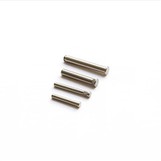
Hey there! As a supplier of eccentric shafts, I often get asked about the best wear-resistant materials for these crucial components. Eccentric shafts play a vital role in various mechanical systems, from automotive engines to industrial machinery. They need to withstand a lot of stress and friction, so choosing the right wear-resistant material is super important. In this blog, I'll share some of the top materials that are commonly used for eccentric shafts and why they're a great choice.
1. Stainless Steel
Stainless steel is one of my go-to materials for eccentric shafts. It's known for its excellent corrosion resistance, which is a big plus, especially in environments where the shaft might be exposed to moisture or chemicals. There are different grades of stainless steel, but for wear resistance, grades like 304 and 316 are often used.
304 stainless steel is a popular choice because it's relatively affordable and has good mechanical properties. It can handle moderate levels of wear and tear, making it suitable for many general-purpose applications. On the other hand, 316 stainless steel offers even better corrosion resistance, thanks to the addition of molybdenum. This makes it ideal for use in more harsh environments, such as marine applications.
If you're interested in a Stainless Steel Eccentric Shaft, we've got a great selection that's precision-machined to meet your exact requirements.
2. Alloy Steel
Alloy steel is another fantastic option for wear-resistant eccentric shafts. By adding various alloying elements like chromium, nickel, and molybdenum, alloy steel can be tailored to have specific properties. For example, chromium can improve hardness and wear resistance, while nickel can enhance toughness.
One of the most well-known alloy steels for wear applications is 4140. It has a good combination of strength, hardness, and toughness, making it suitable for high-stress applications. Heat treatment can further enhance its properties, allowing it to withstand even more wear and tear.
Alloy steel eccentric shafts are often used in heavy machinery, such as construction equipment and mining machinery. They can handle the high loads and intense friction that these applications demand.


3. Tool Steel
Tool steel is designed to be extremely hard and wear-resistant, making it a great choice for eccentric shafts that need to endure high levels of stress and abrasion. There are different types of tool steel, including high-speed steel (HSS) and cold-work tool steel.
High-speed steel is known for its ability to maintain its hardness at high temperatures. This makes it suitable for applications where the shaft might generate a lot of heat, such as in high-speed machining operations. Cold-work tool steel, on the other hand, is more focused on providing excellent wear resistance at room temperature.
Tool steel eccentric shafts are commonly used in precision machining and tooling applications. They can ensure accurate and consistent performance over a long period of time.
4. Bronze
Bronze is a metal alloy that's been used for centuries, and it still has a place in modern eccentric shaft applications. It has good self-lubricating properties, which means it can reduce friction and wear. Bronze is also relatively soft compared to some of the other materials we've discussed, which can be an advantage in certain situations.
For example, in applications where there might be some misalignment or vibration, the softer bronze can help absorb the shock and prevent damage to the shaft and other components. Phosphor bronze is a popular type of bronze for eccentric shafts because it has good strength and wear resistance.
Bronze eccentric shafts are often used in low-speed, high-torque applications, such as in some types of pumps and valves.
5. Ceramic
Ceramic materials are becoming more and more popular for wear-resistant applications, including eccentric shafts. Ceramics are extremely hard and have excellent wear resistance, as well as high-temperature resistance. They can also be very lightweight, which can be beneficial in some applications.
However, ceramics are also brittle, which means they need to be carefully designed and used in applications where they won't be subjected to sudden impacts or high levels of stress. One way to overcome this limitation is to use ceramic coatings on metal shafts. This can provide the wear resistance of ceramic while still maintaining the strength and toughness of the metal.
Ceramic eccentric shafts or ceramic-coated shafts are used in high-performance applications, such as in aerospace and some advanced manufacturing processes.
Factors to Consider When Choosing a Wear-Resistant Material
When choosing a wear-resistant material for an eccentric shaft, there are several factors you need to consider:
- Application Requirements: Think about the specific requirements of your application. How much stress and friction will the shaft be subjected to? What kind of environment will it be used in? For example, if it's a high-speed application, you might need a material that can maintain its hardness at high temperatures.
- Cost: Different materials have different costs, so you need to balance the performance requirements with your budget. Sometimes, a more expensive material might be worth the investment if it can significantly increase the lifespan of the shaft and reduce maintenance costs.
- Machinability: Some materials are easier to machine than others. If you need a complex shape or high precision, you'll want to choose a material that can be easily machined to your specifications.
Wrapping Up
As you can see, there are several great wear-resistant materials available for eccentric shafts, each with its own unique properties and advantages. Whether you need a Stainless Steel Eccentric Shaft for a corrosion-resistant application or a Precision Eccentric Shaft made from alloy steel for high-stress use, we've got you covered.
If you're in the market for an eccentric shaft and want to discuss the best material options for your specific needs, don't hesitate to reach out. We're here to help you make the right choice and provide you with a high-quality product that will meet your expectations.
References
- ASM Handbook, Volume 1: Properties and Selection: Irons, Steels, and High-Performance Alloys
- Machinery's Handbook, 31st Edition