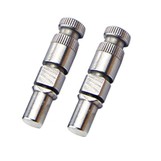
Hey there! As a supplier of AC Motor Shafts, I've had my fair share of customers asking about the difference between precision - made and standard AC motor shafts. So, I thought I'd break it down for you in this blog post.
Let's start with the basics. An AC motor shaft is a crucial component in an AC motor. It's the part that transfers the mechanical power generated by the motor to the load. Now, when it comes to AC motor shafts, there are two main types: standard and precision - made.
Standard AC Motor Shafts
Standard AC motor shafts are the go - to choice for many general applications. They're mass - produced, which means they're more affordable compared to their precision - made counterparts. These shafts are designed to meet a set of common specifications that work well for a wide range of industrial and commercial uses.
The manufacturing process for standard shafts is relatively straightforward. They're usually made from common materials like carbon steel. The tolerances, which are the allowable variations in dimensions, are set at a level that's good enough for most run - of - the - mill applications. For example, if you're using an AC motor in a simple conveyor belt system or a small fan, a standard shaft will do the job just fine.
One of the big advantages of standard shafts is their availability. Since they're mass - produced, you can usually get your hands on them quickly. This is great for businesses that need to replace a broken shaft in a hurry or are looking to keep a stock of spare parts on hand.
However, standard shafts do have their limitations. Because of the looser tolerances, they might not be suitable for applications that require high levels of accuracy. For instance, in a high - speed machine tool where even the slightest misalignment can lead to poor performance or damage to the equipment, a standard shaft might not cut it.
Precision - Made AC Motor Shafts
Precision - made AC motor shafts, on the other hand, are all about accuracy. These shafts are crafted with extreme care to meet very tight tolerances. The manufacturing process is more complex and involves advanced machining techniques and quality control measures.
The materials used for precision shafts are often of a higher grade. Stainless steel or alloy steel might be chosen for their superior strength, corrosion resistance, and other properties. These materials are carefully selected to ensure that the shaft can withstand the specific demands of the application.
In terms of applications, precision - made shafts are ideal for high - end and specialized equipment. Think about a medical imaging machine, a high - precision robotic arm, or a high - speed centrifuge. In these cases, the performance of the entire system depends on the accuracy of the shaft. A precision shaft can ensure smooth operation, reduce vibration, and improve the overall efficiency of the motor.
The production of precision shafts is a time - consuming process. Each shaft is carefully measured and inspected at multiple stages to ensure that it meets the exact specifications. This attention to detail means that precision shafts are more expensive than standard ones. But for applications where precision is non - negotiable, the extra cost is often worth it.
Key Differences
Let's take a closer look at the key differences between precision - made and standard AC motor shafts:
Tolerances
As mentioned earlier, tolerances are a major differentiator. Standard shafts have looser tolerances, typically in the range of a few thousandths of an inch. Precision - made shafts, on the other hand, can have tolerances as tight as a few millionths of an inch. This high level of accuracy is what allows precision shafts to perform in demanding applications.
Materials
Standard shafts are usually made from common carbon steel, which is cost - effective but may not have the same performance characteristics as the materials used in precision shafts. Precision shafts often use high - grade stainless steel or alloy steel, which offer better strength, durability, and resistance to wear and corrosion.


Manufacturing Process
The manufacturing process for standard shafts is more streamlined and focused on mass production. Precision shafts, however, require more advanced machining techniques such as grinding, honing, and precision turning. These processes are more time - consuming and require skilled operators and specialized equipment.
Cost
Cost is another obvious difference. Standard shafts are more affordable due to their mass - production nature and the use of common materials. Precision - made shafts, with their higher - grade materials and complex manufacturing processes, come with a higher price tag.
Applications
Standard shafts are suitable for general - purpose applications where precision is not the primary concern. Precision - made shafts are reserved for high - precision, high - performance applications where even the smallest error can have significant consequences.
Why Choose Us as Your AC Motor Shaft Supplier
As a supplier of AC Motor Shafts, we understand the unique needs of our customers. Whether you're looking for a standard shaft for a simple application or a precision - made shaft for a high - end project, we've got you covered.
We have a wide range of AC Motor Shaft options in stock, so you can get the right shaft quickly. Our team of experts is always on hand to help you choose the best shaft for your specific requirements. We can also provide custom - made shafts if our standard offerings don't meet your needs.
In addition to AC motor shafts, we also offer DC Motor Shaft and Brushless Motor Shaft options. This means you can source all your motor shaft needs from one place, saving you time and effort.
If you're in the market for an AC motor shaft, don't hesitate to reach out. We're here to make the process as easy as possible for you. Whether you have questions about the differences between standard and precision shafts or need help with installation and maintenance, we're just a message or a call away.
In conclusion, understanding the difference between precision - made and standard AC motor shafts is crucial when it comes to choosing the right one for your application. By considering factors like tolerances, materials, manufacturing processes, cost, and applications, you can make an informed decision. And if you need a reliable supplier, we're here to support you every step of the way. So, let's start the conversation and find the perfect AC motor shaft for your project!
References
- "Motor Shaft Design and Manufacturing Handbook", Industrial Press Inc.
- "Advanced Materials for Motor Components", Journal of Materials Science in Engineering