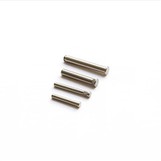
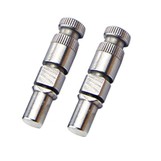
In the industrial realm, long shafts are widely utilized across various sectors, from automotive manufacturing to aerospace engineering. As a long shaft supplier, I've witnessed firsthand the numerous advantages these components offer, such as extended reach, enhanced torque transmission, and the ability to accommodate complex machinery designs. However, it's essential to acknowledge that long shafts also come with their fair share of disadvantages. Understanding these drawbacks is crucial for both suppliers like myself and our customers, as it allows for informed decision - making and the development of effective mitigation strategies.
1. Deflection and Bending
One of the most significant disadvantages of long shafts is their susceptibility to deflection and bending. As the length of a shaft increases, its stiffness decreases, making it more prone to deformation under load. This phenomenon can have several negative consequences.
In precision engineering applications, even a small amount of deflection can lead to significant errors in the positioning of components. For example, in a CNC machine, a deflected long shaft can cause inaccuracies in the machining process, resulting in parts that do not meet the required specifications. This can lead to increased scrap rates and production costs.
Moreover, deflection can also cause uneven wear on the shaft and its associated bearings. When a shaft bends, the load is no longer evenly distributed along its length, leading to increased stress on certain areas. This can accelerate the wear and tear of the shaft and bearings, reducing their lifespan and increasing the frequency of maintenance and replacement.
2. Vibration and Noise
Long shafts are more likely to experience vibration and noise compared to shorter ones. The increased length provides more opportunities for the shaft to resonate at certain frequencies, which can be excited by the rotational motion of the shaft or external forces.
Vibration can have a detrimental impact on the performance of machinery. It can cause loosening of fasteners, damage to other components, and even lead to structural failure in extreme cases. In addition, excessive vibration can also generate noise, which can be a nuisance in the workplace and may even pose a health risk to workers exposed to high - level noise over an extended period.
For instance, in a power transmission system, a vibrating long shaft can cause the gears to mesh improperly, resulting in increased wear and reduced efficiency. The noise generated by the vibration can also make it difficult for operators to detect other potential problems in the machinery.
3. Difficulty in Manufacturing and Installation
Manufacturing long shafts presents several challenges. Maintaining the required level of straightness and dimensional accuracy over a long length is extremely difficult. Even minor deviations in straightness can lead to the problems of deflection and vibration mentioned earlier.
The manufacturing process often requires specialized equipment and techniques. For example, grinding a long shaft to the required surface finish and dimensional tolerance is a complex and time - consuming process. Any errors during the manufacturing process can render the shaft unusable, increasing the cost of production.


Installation of long shafts is also a challenging task. Aligning a long shaft precisely with other components in a machine is difficult due to its length and weight. Misalignment can cause additional stress on the shaft and its associated components, leading to premature failure.
4. Cost
The cost of long shafts is generally higher compared to shorter ones. The increased material requirements, the complexity of the manufacturing process, and the need for specialized handling and transportation all contribute to the higher cost.
In addition, the cost of maintenance and replacement of long shafts is also significant. As mentioned earlier, long shafts are more prone to wear and damage, which means they need to be replaced more frequently. The cost of downtime associated with the replacement of a long shaft can also be substantial, especially in industries where continuous operation is critical.
5. Limited Torque Transmission Capacity
Although long shafts can transmit torque over a long distance, their torque transmission capacity is limited compared to shorter shafts. As the length of the shaft increases, the torsional stiffness decreases, which means that the shaft is more likely to twist under load.
This limitation can be a problem in applications where high torque needs to be transmitted. For example, in a heavy - duty industrial machine, a long shaft may not be able to handle the required torque, leading to reduced performance or even failure of the machine.
Mitigation Strategies
While the disadvantages of long shafts are significant, there are several strategies that can be employed to mitigate these issues.
To address the problem of deflection and bending, one approach is to increase the diameter of the shaft. A larger diameter shaft has higher stiffness and is less likely to deflect under load. Another option is to use intermediate supports, such as bearings or brackets, to reduce the effective length of the shaft and provide additional support.
To reduce vibration and noise, dynamic balancing can be performed on the shaft. This involves adding or removing material from the shaft to ensure that its center of mass is aligned with the axis of rotation, reducing the tendency to vibrate. Additionally, damping materials can be used to absorb the energy of vibration and reduce noise.
In terms of manufacturing and installation, advanced manufacturing technologies such as CNC machining can be used to improve the accuracy and quality of long shafts. During installation, laser alignment tools can be employed to ensure precise alignment of the shaft with other components.
Conclusion
As a long shaft supplier, I understand that while long shafts have their place in many industrial applications, it's important to be aware of their disadvantages. By understanding these drawbacks and implementing appropriate mitigation strategies, both suppliers and customers can make the most of long shafts while minimizing the associated risks.
If you're considering using long shafts in your projects, I encourage you to explore our range of high - quality products. We offer Stainless Steel Long Shaft and Precision Long Shaft that are designed to meet the highest standards of quality and performance. Our team of experts is also available to provide you with professional advice and support. Feel free to contact us to discuss your specific requirements and start a procurement negotiation.
References
- Budynas, R. G., & Nisbett, J. K. (2011). Shigley's Mechanical Engineering Design. McGraw - Hill.
- Norton, R. L. (2012). Machine Design: An Integrated Approach. Pearson.