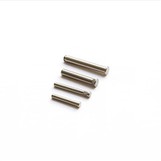
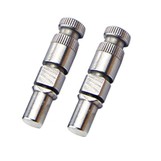
Hey there, fellow drone enthusiasts! I'm a supplier of Drone Yaw Shaft, and today I want to dig into a super important topic: what the heck is the effect of the drone yaw shaft on flight stability in windy conditions?
Let's start with the basics. For those who might be new to the drone world, the yaw shaft is a key component. It controls the rotation of the drone around its vertical axis. Think of it like when you're standing in one place and turning your body left or right - that's what the yaw movement of a drone is like.
Now, when it comes to windy conditions, things get a whole lot more complicated. Wind is like a wild card in the game of drone flight. It can push and pull the drone in all sorts of directions, and that's where the yaw shaft comes into play big time.
One of the main effects of the yaw shaft on flight stability in windy conditions is its ability to counteract the wind's force. When a gust of wind hits the drone from the side, it can cause the drone to start spinning around its vertical axis. That's where the yaw shaft steps in. It adjusts the rotation of the drone to keep it pointed in the right direction. If the wind is pushing the drone to turn to the left, the yaw shaft can make small adjustments to turn the drone slightly to the right, keeping it stable.
But here's the thing - not all yaw shafts are created equal. A high - quality Drone Yaw Shaft is going to be much better at handling windy conditions than a cheap one. A good yaw shaft is made from strong materials that can withstand the stress of constant adjustments. It also has a precise control mechanism that can make quick and accurate adjustments to the drone's yaw angle.
On the other hand, a low - quality yaw shaft might not be able to handle the stress. It could bend or break under the pressure of the wind, which would completely mess up the drone's stability. And if the control mechanism isn't precise, the drone might over - or under - correct its yaw angle, leading to a wobbly and unstable flight.


Another aspect to consider is the relationship between the yaw shaft and other parts of the drone, like the Drone Pitch Shaft and the Drone Roll Shaft. These three shafts work together to control the drone's movement in all three dimensions. In windy conditions, they need to be in sync. For example, if the wind is pushing the drone to tilt forward (pitch) and turn to the side (yaw) at the same time, the yaw shaft and the pitch shaft need to work together to keep the drone stable.
Let's talk about some real - world scenarios. Imagine you're flying your drone in an open field on a windy day. You're trying to get some great aerial shots, but the wind keeps pushing the drone around. If your drone has a good yaw shaft, it'll be able to make those necessary adjustments to keep the camera steady and pointed in the right direction. You'll be able to get smooth, stable footage, even in the face of strong winds.
But if your yaw shaft is not up to par, you'll have a nightmare of a time. The drone will be all over the place, and your footage will look like it was taken by a drunk person. You might even lose control of the drone and crash it, which is definitely not what you want.
Now, I know some of you might be thinking, "Well, can't I just fly my drone on a calm day?" Sure, you can. But let's face it, we don't always have perfect weather conditions. And if you're a professional drone operator, you might need to fly in all sorts of weather. That's why having a reliable yaw shaft is so important.
When it comes to choosing a yaw shaft for your drone, there are a few things to keep in mind. First, look for a shaft that's made from high - quality materials. Aluminum and carbon fiber are great choices because they're strong and lightweight. Second, make sure the shaft has a good control mechanism. Look for one that has a high - precision servo motor or a similar technology.
I also recommend doing some research and reading reviews from other drone users. They can give you some real - world feedback on how different yaw shafts perform in windy conditions. And of course, if you have any questions, don't hesitate to reach out to me. As a Drone Yaw Shaft supplier, I've got a lot of knowledge and experience in this area.
In conclusion, the yaw shaft plays a crucial role in a drone's flight stability, especially in windy conditions. A good yaw shaft can make the difference between a successful flight and a disaster. If you're serious about drone flying, investing in a high - quality yaw shaft is a no - brainer.
If you're interested in learning more about our Drone Yaw Shaft products or want to start a procurement discussion, feel free to get in touch. We're here to help you get the best components for your drones and ensure smooth, stable flights even in the windiest conditions.
References
- Anderson, B. H. (2018). Introduction to Flight Dynamics. Cambridge University Press.
- Stevens, B. L., & Lewis, F. L. (2003). Aircraft Control and Simulation. Wiley - Interscience.