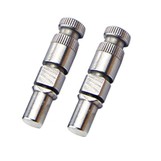
Hey there! As a Robot Main Shaft supplier, I've spent quite a bit of time thinking about the connection between the robot main shaft and the robot's joints. It's a super interesting topic that's not only crucial for understanding how robots work but also has a big impact on their performance. So, let's dive right in and explore this relationship.
First off, what exactly is a robot main shaft? Well, the Robot Main Shaft is like the backbone of a robot. It's a central component that provides support and stability to the entire robotic system. It's usually a long, cylindrical part that runs through the center of the robot, and it plays a key role in transmitting power and motion from the motor to the various parts of the robot.
On the other hand, robot joints are the flexible connections between different parts of the robot. They allow the robot to move in different directions and perform various tasks. Just like our human joints, robot joints come in different types, such as revolute joints, prismatic joints, and spherical joints. Each type of joint has its own unique characteristics and is designed for specific types of movement.
So, how do these two components work together? The relationship between the robot main shaft and the robot's joints is all about power transmission and motion control. The main shaft receives power from the motor and then distributes it to the joints. This power is what enables the joints to move and perform their functions.
Let's take a look at a simple example of a robotic arm. The main shaft of the robotic arm is connected to the motor at one end. When the motor rotates, it generates torque, which is transferred to the main shaft. The main shaft then transmits this torque to the joints of the robotic arm. Each joint is designed to convert this torque into a specific type of movement, such as rotation or linear motion.
For instance, a revolute joint, which is similar to our elbow or knee joint, uses the torque from the main shaft to rotate. This rotation allows the robotic arm to move in a circular motion. A prismatic joint, on the other hand, uses the torque to move in a straight line, like a piston. By combining different types of joints and controlling the amount of torque transmitted to each joint, the robot can perform a wide range of complex movements.

The quality of the robot main shaft also has a significant impact on the performance of the robot's joints. A high - quality main shaft is more efficient at transmitting power. It has less friction, which means less energy is wasted during the power transmission process. This results in smoother and more precise movements of the joints.
If the main shaft is of poor quality, it can cause a lot of problems. For example, excessive friction in the main shaft can lead to overheating, which can damage the motor and the joints. It can also cause vibrations, which can make the robot's movements less accurate and stable. In some cases, a faulty main shaft can even lead to the complete failure of the robot.
Another important aspect of the relationship between the main shaft and the joints is the design and configuration. The design of the main shaft needs to be carefully considered to ensure that it can effectively transmit power to all the joints. For example, in a multi - jointed robot, the main shaft may need to have multiple branches or connections to reach all the joints.
The configuration of the joints also affects how the main shaft functions. If the joints are arranged in a complex way, the main shaft may need to be more flexible or have a more sophisticated design to accommodate the different movement requirements of the joints.
In addition to power transmission, the main shaft also provides structural support to the joints. It helps to keep the joints in place and maintain the overall shape and integrity of the robot. Without a strong and stable main shaft, the joints may not be able to function properly, and the robot may become unstable or even collapse.
Now, let's talk about why this relationship is so important for us as a Robot Main Shaft supplier. Understanding the relationship between the main shaft and the joints allows us to design and manufacture better products. We can create main shafts that are specifically tailored to the needs of different types of robots and their joints.
For example, if a robot requires high - speed and precise movements, we can design a main shaft with low friction and high torsional stiffness. This will ensure that the power is transmitted efficiently to the joints, resulting in smooth and accurate movements.
We also need to consider the durability and reliability of the main shaft. Since the main shaft is constantly under stress from power transmission and the movement of the joints, it needs to be able to withstand these forces over a long period of time. By using high - quality materials and advanced manufacturing techniques, we can produce main shafts that are strong, durable, and reliable.
As a supplier, we also offer technical support to our customers. We can help them choose the right main shaft for their robots based on the type of joints and the specific requirements of their applications. We can also provide advice on installation, maintenance, and troubleshooting.
If you're in the market for a Robot Main Shaft, it's important to choose a supplier who understands the relationship between the main shaft and the robot's joints. A good supplier will be able to provide you with a high - quality product that is designed to work seamlessly with your robot's joints.
Whether you're building a small, simple robot for a hobby project or a large, industrial - grade robot for a manufacturing plant, having the right main shaft is crucial. It can make a big difference in the performance, reliability, and longevity of your robot.
So, if you're interested in learning more about our Robot Main Shafts or have any questions about how they work with your robot's joints, don't hesitate to get in touch. We're here to help you find the perfect solution for your robotic needs. Just reach out to us, and we'll be happy to start a conversation about your requirements and how we can assist you.
References
- Robotics: Modelling, Planning and Control by Bruno Siciliano, Lorenzo Sciavicco, Luigi Villani, and Giuseppe Oriolo
- Introduction to Robotics: Mechanics and Control by John J. Craig