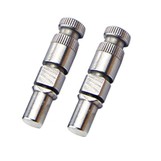
What is the roundness requirement for a fixed shaft?
As a supplier of fixed shafts, I often encounter questions from customers regarding the roundness requirements of these essential components. Roundness is a critical geometric characteristic that significantly impacts the performance and functionality of a fixed shaft. In this blog post, I will delve into the concept of roundness, its importance in fixed shafts, the factors influencing roundness requirements, and how we ensure the highest quality in our products.
Understanding Roundness
Roundness refers to the degree to which a cross - section of a circular object conforms to a perfect circle. In the context of a fixed shaft, it is the deviation of the shaft's cross - sectional shape from an ideal circular form. A perfectly round shaft has all points on its cross - section equidistant from the center. However, in real - world manufacturing, achieving absolute roundness is nearly impossible. Instead, we define acceptable limits of deviation from the ideal circle, which are known as roundness tolerances.
Roundness is typically measured using specialized metrology equipment such as roundness measuring machines. These devices use a probe to trace the circumference of the shaft's cross - section at multiple points. The data collected is then analyzed to determine the roundness error, which is expressed as the difference between the maximum and minimum radii measured around the cross - section.
Importance of Roundness in Fixed Shafts
The roundness of a fixed shaft plays a crucial role in its performance. Here are some key reasons why roundness is so important:
Smooth Rotation
Fixed shafts are often used in applications where they support rotating components such as gears, pulleys, or bearings. A shaft with good roundness ensures smooth and stable rotation of these components. If the shaft is out of round, it can cause vibrations, noise, and uneven wear on the mating parts. For example, in a high - speed motor, an out - of - round shaft can lead to excessive vibrations that not only reduce the efficiency of the motor but also increase the risk of mechanical failure over time.
Accurate Positioning
In precision machinery, fixed shafts are used to provide accurate positioning for various components. A round shaft helps in maintaining the correct alignment of these components. If the roundness is not within the specified tolerance, it can result in misalignment, which can affect the overall accuracy and functionality of the machine. For instance, in a CNC machining center, an out - of - round guide shaft can lead to errors in the positioning of the cutting tool, resulting in inaccurate machining of the workpiece.
Sealing and Leakage Prevention
In applications where the fixed shaft is used in a sealed environment, such as in hydraulic cylinders or pumps, roundness is essential for preventing leakage. A perfectly round shaft ensures a proper seal between the shaft and the sealing elements. If the shaft is out of round, it can create gaps that allow fluid or gas to leak, reducing the efficiency of the system and potentially causing damage to other components.
Factors Influencing Roundness Requirements
The roundness requirements for a fixed shaft can vary depending on several factors:
Application
The specific application of the fixed shaft is the primary factor that determines the roundness requirements. In high - precision applications such as aerospace or medical devices, the roundness tolerance is typically very tight, often in the range of a few micrometers. On the other hand, in less critical applications such as simple conveyor systems, the roundness requirements may be more lenient.
Rotational Speed
The rotational speed of the components supported by the fixed shaft also affects the roundness requirements. Higher rotational speeds demand better roundness to minimize vibrations and ensure smooth operation. For example, a shaft in a turbine engine that rotates at extremely high speeds requires a much higher level of roundness compared to a shaft in a slow - moving agricultural machine.
Load and Stress
The amount of load and stress that the fixed shaft will be subjected to is another important factor. Shafts that carry heavy loads or are exposed to high stress levels need to have better roundness to prevent premature wear and failure. In a heavy - duty industrial gearbox, the shafts are under significant load, and any deviation from the ideal roundness can lead to increased stress concentrations, which can ultimately cause the shaft to break.
How We Ensure High - Quality Roundness in Our Fixed Shafts
As a fixed shaft supplier, we are committed to providing our customers with products that meet the highest quality standards. Here are the steps we take to ensure the roundness of our fixed shafts:
Advanced Manufacturing Processes
We use state - of - the - art CNC machining techniques to manufacture our fixed shafts. CNC machines offer high precision and repeatability, allowing us to achieve tight roundness tolerances. Our machining processes are carefully optimized to minimize errors and ensure that each shaft is machined to the exact specifications.
Quality Control and Inspection
We have a rigorous quality control system in place to ensure the roundness of our fixed shafts. Every shaft undergoes thorough inspection using advanced metrology equipment. Our quality control technicians measure the roundness at multiple points along the shaft's length to ensure that it meets the specified tolerance. Any shafts that do not meet the quality standards are rejected and re - worked or scrapped.
Material Selection
The choice of material also plays a role in achieving good roundness. We carefully select high - quality materials that have the right mechanical properties and are suitable for the specific application. For example, for applications that require high strength and corrosion resistance, we may use Stainless Steel Fixed Shaft. For applications that demand high precision, we may opt for materials with excellent machinability, such as alloy steels.
Continuous Improvement
We are constantly looking for ways to improve our manufacturing processes and quality control methods. We invest in research and development to stay up - to - date with the latest technologies and techniques in the industry. By continuously improving our processes, we are able to offer our customers fixed shafts with even better roundness and overall quality.


Conclusion
Roundness is a critical characteristic of fixed shafts that directly impacts their performance and functionality. As a fixed shaft supplier, we understand the importance of roundness and take every measure to ensure that our products meet the highest quality standards. Whether you need a Stainless Steel Fixed Shaft for a corrosion - resistant application or a Precision Fixed Shaft for a high - precision machine, we have the expertise and capabilities to provide you with the right solution.
If you are in the market for high - quality fixed shafts and have specific roundness requirements, we invite you to contact us for a detailed discussion. Our team of experts will be happy to assist you in selecting the best shaft for your application and answer any questions you may have.
References
- "Mechanical Engineering Design" by Joseph E. Shigley and Charles R. Mischke
- "Geometric Dimensioning and Tolerancing" by Donald J. Maley