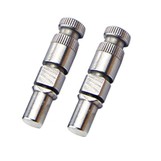
Hey there! As a supplier of DC motor shafts, I often get asked about the weight of a typical DC motor shaft. It's a question that might seem simple at first glance, but the answer can vary quite a bit depending on several factors. In this blog, I'll break down what influences the weight of a DC motor shaft and give you a better idea of what to expect.
First off, let's talk about what a DC motor shaft is. Simply put, it's a crucial part of a DC motor. It's the rod that rotates and transfers the mechanical power generated by the motor to other parts of a machine. You can find these shafts in all sorts of devices, from small toys to large industrial equipment.
Now, when it comes to the weight of a typical DC motor shaft, there's no one - size - fits - all answer. A bunch of things affect it, starting with the size of the shaft. Just like you'd expect, a larger shaft is going to weigh more than a smaller one. The diameter and length of the shaft play a huge role here. For example, a shaft with a large diameter and long length will have more material and thus weigh more.
The material used to make the shaft is another major factor. Different materials have different densities, which directly impacts the weight. Some common materials for DC motor shafts include steel, stainless steel, and aluminum. Steel is a popular choice because it's strong and durable. But it's also relatively heavy. Stainless steel, especially grades like Motor Shaft SUS303 SUS304 SUS316, is corrosion - resistant and has a similar weight to regular steel in many cases. Aluminum, on the other hand, is much lighter. It's often used when weight is a critical factor, like in aerospace or portable devices.
The design of the shaft also matters. A shaft with a simple, solid design will have a different weight compared to one with complex features like grooves, keyways, or holes. These additional features can reduce the overall weight of the shaft by removing some material. However, they also need to be designed in a way that doesn't compromise the shaft's strength and functionality.
Let's take a look at some real - world examples to get a better sense of the weight differences. For small DC motors used in things like RC cars or small fans, the shafts are usually pretty light. These shafts might have a diameter of around 3 - 5 mm and a length of 10 - 20 mm. Made from aluminum, they could weigh just a few grams.
On the other end of the spectrum, large industrial DC motors can have shafts that are massive. These shafts can have diameters of 50 mm or more and lengths of several hundred millimeters. If they're made of steel, they can weigh hundreds of kilograms.


Now, you might be wondering why the weight of a DC motor shaft is important. Well, it has a big impact on the performance of the motor. A heavier shaft can increase the inertia of the motor. Inertia is the resistance of an object to changes in its motion. So, a motor with a heavy shaft might take longer to start up and stop compared to one with a lighter shaft. This can be a problem in applications where quick acceleration and deceleration are required.
On the other hand, in some applications, a heavier shaft can be an advantage. For example, in a motor that needs to maintain a constant speed under heavy loads, a heavier shaft can help smooth out any fluctuations in the rotation.
If you're in the market for a DC motor shaft, it's essential to consider the weight based on your specific application. If you're building a lightweight, portable device, you'll probably want to go for an aluminum shaft or a shaft with a design that minimizes weight. But if you're working on an industrial application where strength and stability are key, a steel shaft might be the better choice.
We also supply other types of motor shafts, such as Brushless Motor Shaft and AC Motor Shaft. These shafts have their own unique characteristics and weight ranges, depending on the same factors we've discussed for DC motor shafts.
When you're looking for a DC motor shaft, it's not just about the weight. You also need to consider the quality of the shaft. A well - made shaft will have precise dimensions, a smooth surface finish, and good material properties. At our company, we take pride in producing high - quality DC motor shafts that meet the needs of our customers.
If you're interested in learning more about our DC motor shafts or have specific requirements for your project, don't hesitate to reach out. We're here to help you find the perfect shaft for your application. Whether you need a lightweight shaft for a high - speed application or a heavy - duty shaft for an industrial machine, we've got you covered.
In conclusion, the weight of a typical DC motor shaft can vary widely depending on size, material, and design. Understanding these factors will help you make an informed decision when choosing a shaft for your DC motor. So, if you're in the market for a DC motor shaft, consider all these aspects and get in touch with us to discuss your options. We're ready to assist you in finding the right solution for your needs.
References:
- Engineering textbooks on motor design and mechanics
- Industry standards and guidelines for DC motor shafts