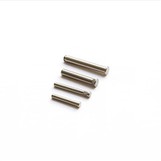
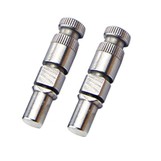
As a supplier of hard chrome shafts, I often encounter inquiries regarding the torque capacity of these essential components. Torque capacity is a critical factor in determining the suitability of a hard chrome shaft for a particular application. In this blog post, I will delve into the concept of torque capacity, the factors that influence it, and how it relates to the performance of hard chrome shafts.
Understanding Torque
Before we discuss the torque capacity of a hard chrome shaft, it's important to understand what torque is. Torque is a measure of the force that can cause an object to rotate about an axis. It is calculated as the product of the force applied and the distance from the axis of rotation to the point where the force is applied. In the context of a hard chrome shaft, torque is the rotational force that the shaft can withstand without failing.
Factors Affecting the Torque Capacity of a Hard Chrome Shaft
Several factors influence the torque capacity of a hard chrome shaft. These factors include the material properties of the shaft, its dimensions, the surface finish, and the type of loading it will experience.
Material Properties
The material from which the hard chrome shaft is made plays a significant role in determining its torque capacity. High - strength materials such as alloy steels are commonly used for hard chrome shafts because they can withstand higher levels of stress. The chrome plating on the shaft not only provides corrosion resistance but also enhances the surface hardness, which can contribute to an increase in torque capacity. For example, a shaft made from a high - carbon alloy steel with a hard chrome finish will generally have a higher torque capacity than a shaft made from a lower - strength material.
Shaft Dimensions
The diameter and length of the hard chrome shaft are crucial factors in determining its torque capacity. A shaft with a larger diameter can generally withstand more torque because it has a greater cross - sectional area, which provides more material to resist the rotational forces. Additionally, the length of the shaft can affect its torsional stiffness. A shorter shaft is typically stiffer and can transmit torque more efficiently than a longer shaft.
Surface Finish
The surface finish of the hard chrome shaft can also impact its torque capacity. A smooth surface finish reduces friction and wear, which can prevent premature failure of the shaft. The hard chrome plating provides a smooth and hard surface that is resistant to abrasion, allowing the shaft to operate under high - torque conditions without significant wear.
Loading Conditions
The type of loading that the hard chrome shaft will experience is another important factor. There are different types of loading, including static loading, dynamic loading, and cyclic loading. Static loading refers to a constant torque applied to the shaft, while dynamic loading involves variable or intermittent torque. Cyclic loading occurs when the shaft is subjected to repeated cycles of torque. Each type of loading requires a different approach to determining the appropriate torque capacity. For example, a shaft that will experience cyclic loading may need to be designed with a higher safety factor to account for fatigue failure.
Calculating the Torque Capacity of a Hard Chrome Shaft
The torque capacity of a hard chrome shaft can be calculated using engineering formulas based on the principles of mechanics. The most common formula for calculating the torsional shear stress ((\tau)) in a solid circular shaft is given by:
(\tau=\frac{T r}{J})
where (T) is the torque applied to the shaft, (r) is the radius of the shaft, and (J) is the polar moment of inertia of the shaft's cross - section. For a solid circular shaft, (J = \frac{\pi d^{4}}{32}), where (d) is the diameter of the shaft.
To determine the maximum torque that the shaft can withstand, we need to consider the allowable shear stress ((\tau_{allow})) of the material. The maximum torque ((T_{max})) can be calculated as:
(T_{max}=\frac{\tau_{allow} J}{r})
It's important to note that this is a simplified calculation, and in real - world applications, other factors such as stress concentrations, dynamic effects, and the presence of keyways or other features need to be taken into account.
Importance of Torque Capacity in Applications
The torque capacity of a hard chrome shaft is crucial in various applications. In automotive engines, for example, hard chrome shafts are used in camshafts and crankshafts. These shafts need to transmit high levels of torque to operate the engine's valves and pistons. If the torque capacity of the shaft is insufficient, it can lead to premature failure, which can cause significant damage to the engine.
In industrial machinery, hard chrome shafts are used in conveyor systems, robotic arms, and other equipment. The torque capacity of these shafts determines the amount of power that can be transmitted and the load that the equipment can handle. A shaft with an appropriate torque capacity ensures the reliable operation of the machinery and reduces the risk of breakdowns.

Our Hard Chrome Shafts and Torque Capacity
As a supplier of [Hard Chrome Linear Shaft]( /metal - shaft/hard - chrome - shaft/hard - chrome - linear - shaft.html), we understand the importance of torque capacity in our products. We use high - quality materials and advanced manufacturing processes to ensure that our shafts have the optimal torque capacity for various applications. Our engineers work closely with customers to understand their specific requirements and design shafts that meet or exceed their expectations.
We offer a wide range of hard chrome shafts with different diameters, lengths, and surface finishes. Our shafts are tested rigorously to ensure that they can withstand the required torque levels. Whether you need a shaft for a high - performance automotive application or a heavy - duty industrial machine, we have the expertise and resources to provide you with the right solution.
Contact Us for Your Hard Chrome Shaft Needs
If you are in the market for hard chrome shafts and need to understand more about their torque capacity or have specific requirements for your application, we encourage you to contact us. Our team of experts is ready to assist you in selecting the right shaft and providing you with detailed information about its performance and capabilities. We can also offer custom - made solutions to meet your unique needs. Don't hesitate to reach out to us for a consultation and start the process of sourcing high - quality hard chrome shafts for your project.
References
- Budynas, R. G., & Nisbett, J. K. (2011). Shigley's Mechanical Engineering Design. McGraw - Hill.
- Young, W. C., Budynas, R. G., & Sadegh, A. (2002). Roark's Formulas for Stress and Strain. McGraw - Hill.