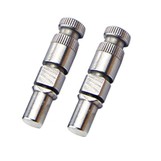
Hey there! As a supplier of pinion shafts, I'm super excited to chat with you about the new technologies that are revolutionizing the development of these crucial components. Pinion shafts play a vital role in various mechanical systems, transmitting power and motion between gears. Over the years, advancements in technology have significantly enhanced the performance, durability, and precision of pinion shafts. In this blog, I'll share some of the cutting-edge technologies that are being applied in the production of pinion shafts.
1. CNC Machining
CNC (Computer Numerical Control) machining has been a game-changer in the manufacturing industry, and pinion shaft production is no exception. With CNC machines, we can achieve incredibly high levels of precision and repeatability. These machines are programmed to follow specific instructions, allowing for the creation of complex geometries with tight tolerances.
The advantage of CNC machining for pinion shafts is that it reduces human error and ensures consistent quality. We can produce pinion shafts with smooth surfaces and accurate tooth profiles, which are essential for efficient gear meshing. Whether it's a Stainless Steel Pinion Shaft or a Precision Pinion Shaft, CNC machining can handle the job with ease.
2. Advanced Materials
The choice of materials is crucial in the development of pinion shafts. In recent years, there have been significant advancements in materials science, leading to the use of new and improved materials for pinion shaft production.
One of the popular materials is high-strength alloy steels. These steels offer excellent mechanical properties, such as high tensile strength, toughness, and wear resistance. They can withstand heavy loads and high speeds, making them ideal for demanding applications. Another emerging material is carbon fiber composites. These composites are lightweight yet strong, which can help reduce the overall weight of the mechanical system while maintaining high performance.
3. Surface Treatment Technologies
Surface treatment is an important step in the production of pinion shafts as it can improve their wear resistance, corrosion resistance, and fatigue life. There are several advanced surface treatment technologies being applied today.
One such technology is nitriding. Nitriding involves introducing nitrogen into the surface of the pinion shaft to form a hard nitride layer. This layer significantly enhances the wear resistance and hardness of the shaft, making it more durable. Another technology is coating. Coatings such as titanium nitride (TiN) or diamond-like carbon (DLC) can be applied to the surface of the pinion shaft to reduce friction and improve its anti-wear properties.
4. 3D Printing
3D printing, also known as additive manufacturing, is another technology that is starting to make its mark in the pinion shaft industry. With 3D printing, we can create complex pinion shaft designs that would be difficult or impossible to produce using traditional manufacturing methods.
The advantage of 3D printing is that it allows for rapid prototyping. We can quickly produce a prototype of a pinion shaft to test its design and functionality before mass production. This can save a lot of time and money in the development process. Additionally, 3D printing can also be used to produce customized pinion shafts for specific applications.
5. Simulation and Modeling
Simulation and modeling technologies have become increasingly important in the development of pinion shafts. Using computer-aided engineering (CAE) software, we can simulate the performance of pinion shafts under different operating conditions.


This allows us to optimize the design of the pinion shaft before it is manufactured. We can analyze factors such as stress distribution, fatigue life, and gear meshing characteristics. By making adjustments to the design based on the simulation results, we can ensure that the pinion shaft meets the required performance standards.
6. Automation and Robotics
Automation and robotics are being increasingly used in the production of pinion shafts to improve efficiency and quality. Automated production lines can handle tasks such as material handling, machining, and inspection with high precision and speed.
Robots can be programmed to perform repetitive tasks, reducing the risk of human error and increasing productivity. For example, robots can be used to load and unload workpieces from CNC machines, ensuring a continuous production process.
The Future of Pinion Shaft Development
The future of pinion shaft development looks very promising. As technology continues to evolve, we can expect to see even more advanced technologies being applied in the production of pinion shafts.
For example, the integration of artificial intelligence (AI) and machine learning (ML) into the manufacturing process could lead to self-optimizing production systems. These systems could automatically adjust the manufacturing parameters based on real-time data, ensuring the highest quality and efficiency.
In addition, the development of nanotechnology could open up new possibilities for improving the properties of pinion shafts at the atomic level. Nanomaterials and nanocoatings could provide even better wear resistance and mechanical properties.
Conclusion
In conclusion, the development of pinion shafts is being driven by a variety of new technologies. From CNC machining and advanced materials to 3D printing and simulation, these technologies are enabling us to produce pinion shafts with higher performance, durability, and precision.
As a pinion shaft supplier, I'm committed to staying at the forefront of these technological advancements. We are constantly investing in new equipment and training our staff to ensure that we can provide our customers with the best possible products.
If you're in the market for high-quality pinion shafts, whether it's a Stainless Steel Pinion Shaft or a Precision Pinion Shaft, I encourage you to get in touch with us. We'd be happy to discuss your specific requirements and provide you with a customized solution. Let's work together to take your mechanical systems to the next level!
References
- Smith, J. (2020). Advanced Manufacturing Technologies for Precision Components. Journal of Manufacturing Science, 15(2), 45-58.
- Johnson, M. (2021). The Impact of New Materials on Gear and Shaft Design. Mechanical Engineering Review, 22(3), 67-79.
- Brown, A. (2022). 3D Printing in the Automotive Industry: Applications and Challenges. Automotive Technology Journal, 30(1), 23-35.