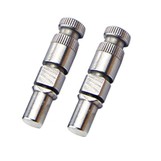
Hey there! As a long shaft supplier, I often get asked about the torque capacity of long shafts. It's a crucial topic, especially for those in industries where long shafts are used in machinery and equipment. So, let's dive right in and explore what the torque capacity of a long shaft really means.
Understanding Torque
First things first, let's understand what torque is. Torque is essentially a measure of the force that can cause an object to rotate around an axis. In the context of a long shaft, it's the amount of twisting force the shaft can handle without failing. Think of it like trying to turn a stubborn bolt with a wrench. The more force you apply to the wrench, the more torque you're generating. If the bolt is too tight and you apply too much force, the wrench or the bolt might break. Similarly, if a long shaft is subjected to more torque than it can handle, it can deform or even snap.
Factors Affecting Torque Capacity
Several factors come into play when determining the torque capacity of a long shaft.
Material
The material of the long shaft is one of the most significant factors. Different materials have different mechanical properties, such as strength and stiffness. For example, stainless steel is known for its corrosion resistance and relatively high strength. A Stainless Steel Long Shaft can generally handle more torque compared to a shaft made of a softer material like aluminum. On the other hand, precision shafts made from high - grade alloy steels are designed to have excellent strength - to - weight ratios and can withstand high levels of torque. You can check out our Precision Long Shaft for more information on how material choice impacts torque capacity.
Diameter
The diameter of the long shaft also plays a crucial role. A shaft with a larger diameter has a greater cross - sectional area. This means there is more material to resist the twisting force. Just like a thicker rope can handle more pulling force than a thinner one, a larger - diameter long shaft can handle more torque. For instance, if you have two shafts of the same length and material, but one has a diameter of 2 inches and the other has a diameter of 1 inch, the 2 - inch diameter shaft will have a significantly higher torque capacity.


Length
Interestingly, the length of the long shaft can have an impact on its torque capacity. Longer shafts are more prone to deflection and twisting under torque. As the length increases, the shaft becomes more flexible, and it can start to bend or twist more easily. This means that for a given material and diameter, a shorter shaft will generally have a higher torque capacity than a longer one. However, in many applications, long shafts are necessary, and engineers have to find ways to compensate for the reduced torque capacity, such as by using additional supports or increasing the shaft's diameter.
Surface Finish
The surface finish of the long shaft can also affect its torque capacity. A smooth surface finish reduces friction and stress concentrations. When a shaft has a rough surface, there are microscopic peaks and valleys that can act as stress raisers. These stress raisers can cause the shaft to fail at lower torque levels. So, a well - finished long shaft can often handle more torque than one with a poor surface finish.
Calculating Torque Capacity
Calculating the torque capacity of a long shaft is not a simple task. It usually involves complex engineering formulas and takes into account the factors we just discussed. One of the most common formulas used to calculate the torsional shear stress ((\tau)) in a shaft is (\tau=\frac{T r}{J}), where (T) is the torque, (r) is the radius of the shaft, and (J) is the polar moment of inertia of the shaft's cross - section.
To find the maximum torque a shaft can handle, we need to know the allowable shear stress ((\tau_{allow})) of the material. Then, we can rearrange the formula to solve for (T): (T=\frac{\tau_{allow}J}{r}).
However, this is a simplified view. In real - world applications, other factors like dynamic loading, fatigue, and the presence of keyways or splines also need to be considered. That's why it's often best to consult with an experienced engineer or use specialized software to accurately determine the torque capacity of a long shaft.
Importance of Knowing Torque Capacity
Knowing the torque capacity of a long shaft is crucial for several reasons.
Safety
In any machinery or equipment, safety is of utmost importance. If a long shaft fails due to excessive torque, it can cause the entire system to malfunction. This can lead to accidents, injuries, and costly downtime. By ensuring that the shaft is designed to handle the expected torque, we can prevent these safety hazards.
Performance
The performance of a machine depends on the proper functioning of its components. A long shaft that is under - sized for the torque it needs to handle will not be able to transmit power efficiently. This can result in reduced performance, such as slower operation, lower power output, and increased wear and tear on other components. On the other hand, an over - sized shaft can add unnecessary weight and cost to the system.
Applications of Long Shafts and Torque Capacity
Long shafts are used in a wide variety of applications, each with its own torque requirements.
Automotive Industry
In cars and trucks, long shafts are used in the drivetrain to transfer power from the engine to the wheels. These shafts need to be able to handle the high torque generated by the engine, especially during acceleration and when towing heavy loads. The torque capacity of these shafts is carefully designed to ensure smooth and reliable operation.
Industrial Machinery
In industrial settings, long shafts are used in conveyor systems, pumps, and motors. For example, in a large conveyor belt system, the long shaft that drives the belt needs to be able to handle the torque required to move the heavy loads. If the torque capacity is not sufficient, the shaft can break, causing the conveyor to stop working.
Aerospace Industry
In the aerospace industry, weight is a critical factor. Long shafts are used in various aircraft systems, such as in the control surfaces and engine components. Engineers need to design these shafts to have high torque capacities while keeping the weight as low as possible. This often involves using advanced materials and innovative designs.
Conclusion
So, as you can see, the torque capacity of a long shaft is a complex topic that depends on several factors. Whether you're in the automotive, industrial, or aerospace industry, understanding the torque capacity of your long shafts is essential for safety and performance.
If you're in the market for high - quality long shafts and need to know more about their torque capacities, we're here to help. We offer a wide range of long shafts, including Stainless Steel Long Shaft and Precision Long Shaft. Our team of experts can assist you in choosing the right shaft for your application and can provide you with detailed information about torque capacities. Don't hesitate to reach out to us for a consultation and start the procurement process. We're looking forward to working with you!
References
- Budynas, R. G., & Nisbett, J. K. (2011). Shigley's Mechanical Engineering Design. McGraw - Hill.
- Juvinall, R. C., & Marshek, K. M. (2006). Fundamentals of Machine Component Design. Wiley.