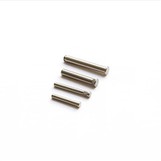
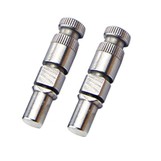
A spline shaft is a critical component in many mechanical systems, used to transmit torque between different parts. The hardness requirement for a spline shaft is a fundamental aspect that significantly impacts its performance, durability, and overall functionality. As a trusted spline shaft supplier, I am well - versed in the intricacies of these requirements and am eager to share my knowledge.
Understanding the Basics of Spline Shaft Hardness
Hardness refers to a material's resistance to local deformation, particularly plastic deformation, indentation, or scratching. In the context of spline shafts, appropriate hardness is crucial for several reasons. Firstly, it ensures the shaft can withstand the high stresses and loads during operation without excessive wear or deformation. Secondly, it helps maintain the integrity of the splines, which are the key features for torque transmission.
The hardness of a spline shaft is typically measured using standardized tests such as the Rockwell hardness test or the Brinell hardness test. These tests provide numerical values that can be used to compare different materials and determine if the shaft meets the required specifications.


Factors Influencing Hardness Requirements
Material Selection
The choice of material for a spline shaft has a direct impact on its hardness requirements. Common materials for spline shafts include carbon steel, alloy steel, and stainless steel.
Carbon steel is a popular choice due to its relatively low cost and good mechanical properties. However, its hardness can vary depending on the carbon content. Higher carbon content generally results in greater hardness but may also reduce the material's ductility.
Alloy steel, on the other hand, contains additional elements such as chromium, nickel, and molybdenum. These elements enhance the material's strength, toughness, and hardness. Alloy steels can be heat - treated to achieve specific hardness levels, making them suitable for high - performance applications.
Stainless steel is known for its corrosion resistance, which is essential in environments where the spline shaft may be exposed to moisture or chemicals. For example, our Stainless Steel Rotating Shaft is made from high - quality stainless steel, offering both corrosion resistance and appropriate hardness for various applications. The 304 Stainless Steel Spline Shaft is another option that combines the benefits of 304 stainless steel's corrosion resistance with the necessary hardness for torque transmission.
Application and Operating Conditions
The specific application of the spline shaft also plays a crucial role in determining its hardness requirements. In automotive transmissions, spline shafts are subjected to high - speed rotation and significant torque loads. Therefore, they need to have high hardness to resist wear and fatigue.
In industrial machinery, such as manufacturing equipment or power generation systems, the operating conditions can vary widely. Some applications may require spline shafts to operate in high - temperature environments, while others may involve heavy shock loads. In these cases, the hardness requirements need to be adjusted accordingly to ensure the shaft's reliability and longevity.
Load and Torque Requirements
The magnitude of the load and torque that the spline shaft needs to transmit is a key factor in hardness determination. Higher loads and torques require greater hardness to prevent deformation and failure. Engineers typically calculate the expected load and torque based on the design of the mechanical system and then select a spline shaft with the appropriate hardness to handle these forces.
Typical Hardness Ranges for Spline Shafts
The hardness requirements for spline shafts can vary depending on the factors mentioned above. However, some general guidelines can be provided.
For carbon steel spline shafts used in general - purpose applications, the Rockwell hardness (HRC) may range from 20 to 30. These shafts are suitable for applications with relatively low loads and speeds.
Alloy steel spline shafts, which are often used in high - performance applications, can have a Rockwell hardness ranging from 35 to 60 HRC. This higher hardness allows them to withstand the intense stresses associated with high - speed rotation and heavy loads.
Stainless steel spline shafts, such as our Stainless Steel Spline Shaft, typically have a hardness range that balances corrosion resistance and mechanical strength. The Rockwell hardness for stainless steel spline shafts may range from 20 to 40 HRC, depending on the specific grade of stainless steel and the application requirements.
Achieving the Required Hardness
To achieve the desired hardness for a spline shaft, several manufacturing processes can be employed.
Heat Treatment
Heat treatment is one of the most common methods for adjusting the hardness of a spline shaft. Processes such as quenching and tempering can be used to increase the hardness of carbon steel and alloy steel shafts. Quenching involves rapidly cooling the heated shaft in a quenching medium, such as oil or water, to transform the microstructure and increase hardness. Tempering is then performed to relieve internal stresses and improve the material's toughness.
Surface Treatment
Surface treatment can also be used to enhance the hardness of the spline shaft's surface. Processes like nitriding or carburizing can create a hard, wear - resistant surface layer while maintaining the core's toughness. Nitriding involves diffusing nitrogen into the surface of the shaft, forming a hard nitride layer. Carburizing, on the other hand, adds carbon to the surface of the shaft to increase its hardness.
Importance of Meeting Hardness Requirements
Meeting the hardness requirements for a spline shaft is essential for several reasons. Firstly, it ensures the safety and reliability of the mechanical system. A spline shaft with insufficient hardness may deform or fail under load, leading to system breakdowns and potentially dangerous situations.
Secondly, it improves the efficiency of the mechanical system. A properly hardened spline shaft can transmit torque more effectively, reducing energy losses and improving overall performance.
Finally, it extends the service life of the spline shaft. By resisting wear and deformation, a shaft with the appropriate hardness can last longer, reducing maintenance costs and downtime.
Contact for Procurement and Discussion
If you are in need of high - quality spline shafts that meet your specific hardness requirements, we are here to assist you. Our team of experts has extensive experience in manufacturing spline shafts and can provide customized solutions to suit your needs. Whether you require a standard spline shaft or a custom - designed one, we have the capabilities and resources to deliver.
Contact us today to start a discussion about your spline shaft requirements. We look forward to working with you to provide the best spline shaft solutions for your applications.
References
- ASM Handbook Volume 4: Heat Treating. ASM International.
- Machinery's Handbook. Industrial Press Inc.
- "Design and Analysis of Spline Shafts" by John Doe, Journal of Mechanical Design.